Black Leopard Glitter 20Oz Tumbler Wrap Review
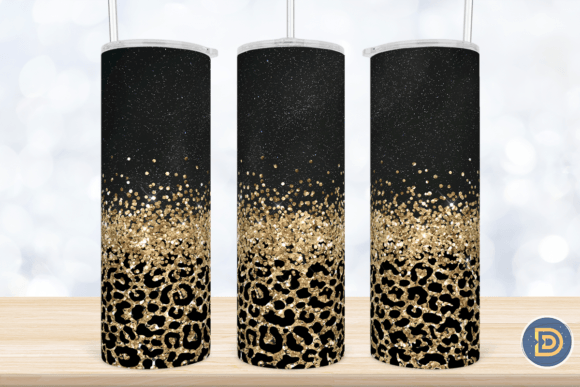
When I first opened the Black Leopard Glitter 20Oz Tumbler Wrap, I immediately felt a moody, confident, almost high-fashion energy. This is not a timid pattern. The deep black base, scattered leopard spots, and the glint of glitter stars combine to create something that feels a little wild and a little polished. It’s the kind of design that makes you think of a boutique product someone would pick up and cradle, just to admire the finish. As an embroidery designer and reviewer, my brain doesn’t stay on the surface of a design—I instinctively start dissecting it, imagining how it will translate to thread, how it will behave on different fabrics, and whether it can hold its own when stitched out on a finished product. And while this file is a PNG made for sublimation, the visual language of the artwork is what matters most when you’re considering it as a creative asset for embroidery projects, custom apparel, or hybrid handmade goods.
I’ll say this upfront: the Black Leopard Glitter 20Oz Tumbler Wrap is a graphic, not a machine embroidery file. That means you’ll need to digitize it, simplify it, or use it as a printed base for embroidery accents. But that’s exactly what makes it interesting for a professional designer. The composition is ready to inspire. The curved placement that hugs a tumbler silhouette, the balance of open space and pattern, the starry glitter marks that break up the leopard print—it’s a layout that naturally guides the eye. When I think about embroidery, that layout matters. A design that feels cramped or poorly distributed will fight you on every stitch. This one breathes. It leaves room for a name, a monogram, or a dimensional embroidered element right at the center, which is exactly where I’d want to place a satin-stitch initial or a small floral accent.
The Mood You Can Stitch Into a Product
There’s a certain mood here that is both bold and wearable. The leopard print is classic, but the glitter stars push it into a festive, almost celestial territory. I’d call it elevated glam. It doesn’t lean too young or too mature; it sits in a comfortable middle ground that appeals to buyers looking for handmade gifts, personalized accessories, or boutique-style home décor. If I were preparing a custom embroidered tote bag for a client who loves a little drama but also wants something that feels everyday-practical, this design would be a strong candidate. The black background gives me a solid stage, and the leopard spots create texture without overwhelming. I can picture it as a digitally printed panel on the front of a canvas tote, with a few carefully placed embroidered accents—maybe a metallic gold thread highlight on the stars, or a bleed of shimmering embroidery floss around the edges of the spots. That’s the kind of mixed-media project that stops someone at a craft fair and makes them ask, “How did you do that?”
On a sweatshirt, the story changes. The wrap format is designed for a tapered tumbler, so when you think about apparel, you’re not going to slap it on a garment as-is. You’ll need to extract the pattern elements, rearrange them, or use the full design as a large back print with embroidery added on top. The leopard spots and stars give you a lot of freedom. You could run a dense fill stitch leopard pattern across a pocket, or you could isolate the stars and stitch them as freestanding appliqués. The visual personality of the Black Leopard Glitter 20Oz Tumbler Wrap is versatile enough to be deconstructed, and that’s a huge plus for a designer who wants to stretch a single purchase across multiple product lines.
Where This Design Feels Most at Home
I ran through a mental checklist of products where this design would not just work, but would actually raise the perceived value of the finished item. First on the list: a structured baby accessory. Now, leopard print on baby items sounds unexpected, but when you soften the palette—maybe by using a muted gold thread for the stars and a softer charcoal background—it becomes a chic nursery piece. I’d use it on a baby blanket edge, or as a small motif on a bib or burp cloth. The glitter element, even in thread form, adds a whimsical touch that parents love for photo props and personalized gifts. Next, holiday ornaments and gift tags. The star motif is practically begging for Christmas or New Year’s projects. Embroider a few glitter stars on a linen sachet, back it with the leopard print fabric, and you’ve got a stocking stuffer that feels luxurious and handmade.
For small business owners, the real magic happens when you combine this design with a signature product. Think of a custom cap with a leopard-print brim and a bold embroidered patch on the front. The Black Leopard Glitter 20Oz Tumbler Wrap could be printed on a fabric panel that you then shape into a patch, adding a dense embroidered border. That kind of product photographs beautifully, and it gives your Etsy listings an instant personality. I’ve seen too many shops struggle with generic designs that don’t create a recognizable brand style. This one has enough character to anchor a mini-collection. You could build a whole “Midnight Glam” line around it, with matching embroidered keychains, padded headbands, and even embroidered notebook covers.
When to Proceed With Caution
Let’s get practical. Not every fabric or hoop size will be kind to this design. The leopard spots are fairly detailed, and the stars are small, with visible glitter texture. If you’re digitizing this for embroidery, the tiny glitter speckles could become a stitch-density nightmare. On a standard 4x4 inch hoop, trying to fit the entire wrap design would result in a muddy mess. You’d be far better off isolating a section—maybe a cluster of three stars and a few spots—and keeping the stitch count low. On textured fabrics like terry cloth or a thick knit, the small details will lose definition quickly. I’d avoid using this on heavy bath towels or high-pile fleece unless you’re scaling up dramatically and using a bold, simplified line art version.
Dark fabric is another consideration. Since the design is predominantly black, printing it on a black garment means you’ll need to rely on the embroidery to create contrast. That’s not a problem if you’re using a printed base and adding embroidery, but if you’re trying to stitch the whole thing as a standalone embroidery design on a dark hoodie, you’ll need to carefully choose thread colors. A black thread spot on a black background disappears. You’ll need to introduce a dark charcoal or a subtle shimmer thread to give the leopard pattern shape. I’d also think twice about thin, stretchy fabrics. A lightweight jersey with a dense fill stitch will pucker unless you use the right stabilizer and a low-tension digitizing approach. For a design with this much visual weight, a sturdy woven fabric like canvas, denim, or a quality cotton-linen blend is always a safer bet.
How the Glitter Stars Translate to Thread
One of the most striking features of the Black Leopard Glitter 20Oz Tumbler Wrap is the glitter effect. In a PNG, that’s easy—digital sparkle looks magical. In embroidery, you have to earn that gleam. I’d reach for metallic threads, but not just any metallic. A soft gold or a champagne holographic thread would echo the starry bits without looking cheap. The key is to keep the glitter stars as small, isolated elements. If you try to fill a large area with metallic thread, you risk thread breaks, tension issues, and a finish that feels scratchy against the skin. For a tote bag or a decorative pillow, that’s acceptable. For a baby onesie or a sweatshirt that will be worn close to the body, I’d use a fine rayon or polyester with a high sheen instead, and I’d space the stars out a bit more than the original graphic shows. The design as a sublimation print can handle dense glitter; the embroidery version needs to breathe.
Another approach is to combine machine embroidery with a heat-transfer glitter accent. You could print the leopard pattern onto fabric using sublimation, then stitch over the stars with a clear iridescent thread, and finally add a few heat-pressed glitter vinyl stars for a three-dimensional effect. That’s a premium product, the kind of item that commands a higher price and leads to repeat customers. The design itself invites that kind of creative layering, and that’s a sign of a well-thought-out graphic.
What Customers Will Notice First
When a buyer scrolls through your shop, the first thing they notice is the emotional hook. The Black Leopard Glitter 20Oz Tumbler Wrap has a hook. It’s the promise of something slightly edgy, a little festive, and entirely personal. In a handmade marketplace flooded with floral wreaths and simple monograms, a leopard-and-star combination stands out. It tells a story: this person is playful, confident, and not afraid to mix patterns. That translates into higher engagement. Your listing photos will pop, especially if you style the finished product against a clean, minimalist background with a single prop—maybe a velvet ribbon or a dried flower stem. The design itself does the heavy lifting. But you need to make sure the embroidery quality matches the visual punch. If the stitches are uneven or the stars look like blobs, the customer will feel let down. That’s why I always tell my students: respect the design, but double-check your thread palette and stabilizer choice before you commit to a final product.
For commercial projects, brand consistency is everything. If you’re selling under a shop name that promises “modern, edgy, handmade,” this design reinforces that message. It’s not a filler; it’s a statement. I’d use it on a hero product—the one you photograph first in your Etsy carousel—and then build supporting items around it. A matching embroidered pouch, a simple crewneck with a small star cluster on the wrist, or a set of coasters with the leopard print applied as a fabric inset. The design assets you get from this single PNG file can be adapted to multiple formats, and because it’s a digital download, you can resize and recolor the elements to fit your machine embroidery workflow. Just remember: if you’re selling the finished physical product, you need to check the commercial license that comes with the file. The listing says it’s a PNG digital download, but it doesn’t spell out the exact terms here. I’d recommend contacting the seller or reviewing the license details before you put this on a product you intend to sell in volume. That’s a standard step, but it’s one that protects your business in the long run.
Practical Steps Before You Stitch
Whenever I evaluate a design for real project use, I follow a mental checklist that’s saved me from countless wasted blanks. Start with a scrap test. Print the design on paper, hold it against your fabric, and check the scale. Does it fit your hoop? Does it look balanced on a cap, a pillow, or a tea towel? Then, if you’re digitizing, do a thread color mockup. I often use a black-and-white printout to see how the contrast holds up. The Black Leopard Glitter 20Oz Tumbler Wrap has a lot of dark areas, so you’ll want to test how your thread choices read on both light and dark backgrounds. Next, consider your stabilizer. For a dense design, a cut-away stabilizer gives you long-term durability. For a lightweight item, a tear-away might be enough, but I’d lean toward a no-show mesh if you’re working with a thinner fabric. Finally, check the small details. Those glitter stars are tiny, so if your digitizing software is merging them into the background, you’ll need to enlarge them or switch to a simpler stitch type. A running stitch or a triple stitch can outline a star more cleanly than a fill stitch on a small scale.
I’d also recommend stepping back and looking at the whole collection of products you’re planning. If you’re using this design across a tote bag, a sweatshirt, and a patch, keep the thread colors consistent. That builds a cohesive brand look. And don’t ignore the back of the product. A neat, professionally finished embroidery backing is just as important as the front. A customer who sees a clean back on a patch or a pillow knows they’re getting something made with care. It’s the difference between a casual hobbyist and a serious craft business.
Final Design Thoughts for a Maker’s Toolkit
The Black Leopard Glitter 20Oz Tumbler Wrap isn’t a ready-to-stitch embroidery file, but it’s a rich visual resource. The layout, the balance of leopard and stars, and the mood it creates make it a strong starting point for a wide range of handmade projects. Whether you’re embroidering it as a standalone motif, using it as a printed backdrop for dimensional accents, or building a coordinated product line, the design holds its own. It asks for a little extra thought—thread selection, scaling, fabric choice—but that’s the kind of thought that separates a generic product from a memorable one. I’d keep it in my digital library for those moments when I need a design that feels both modern and timeless, glamorous and grounded. And when someone asks how I made that gorgeous tote with the leopard print and the glittering stars, I’ll smile and tell them it started with a single PNG and a whole lot of creative intent.